Opal SA ConstructionConstruction
What Is Residential Concreting? A Complete Guide for Adelaide Homeowners
If you’ve been researching home improvement projects in Adelaide, chances are residential concreting has come up — whether it’s for a new driveway, a backyard patio, or a garage slab. But what does residential concreting actually involve, and how do you know if it’s the right solution for your property?
This guide breaks down everything Adelaide homeowners need to understand before making a decision — from what residential concreting covers to how the process works and what to expect from a professional installation.
What Is Residential Concreting?
Residential concreting refers to the installation, repair, or replacement of concrete surfaces on private residential properties. This includes any concrete work carried out at houses, duplexes, townhouses, or private land — as opposed to commercial or industrial concreting, which involves larger-scale structural applications.
In simple terms, if it’s concrete work done at your home — whether that’s your driveway, path, patio, or shed floor — it falls under residential concreting.
The scope of residential concreting is broader than most homeowners initially realise. It’s not limited to pouring a flat grey slab. Modern residential concreting includes a wide range of surface types, finishes, and functional applications designed to improve both the practicality and the appearance of your property.
What Surfaces Does Residential Concreting Cover?
Residential concreting encompasses a variety of outdoor and semi-enclosed surfaces. The most common applications in Adelaide include:
Driveways and Crossovers
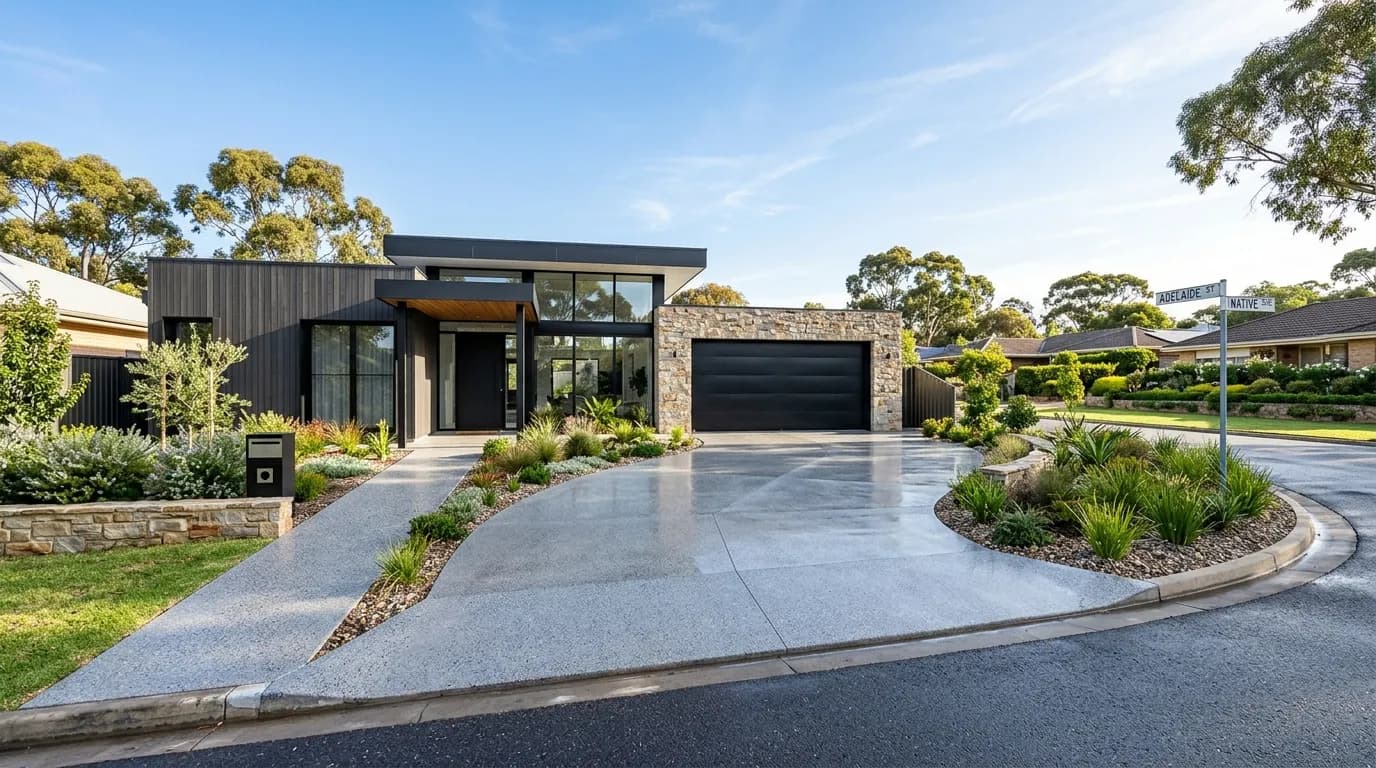
Driveways are the most common residential concreting project. A concrete driveway provides a durable, load-bearing surface that can withstand the daily weight of vehicles, resist Adelaide’s summer heat, and require minimal maintenance over time. Crossovers — the section connecting your driveway to the public footpath — often require council approval and must meet specific gradient and drainage standards.
Concrete Patios
A concrete patio creates a functional outdoor living area connected to the home. Whether used for entertaining, dining, or relaxing, a well-laid patio adds genuine usability to your backyard. Concrete patios can be finished in a range of styles, from plain grey to exposed aggregate or coloured concrete, depending on your aesthetic preferences.
Shed and Garage Slabs
Concrete slabs form the structural foundation for garages, garden sheds, and workshop spaces. A properly prepared and poured slab ensures your structure sits on a level, stable, and moisture-resistant base. The thickness and reinforcement requirements vary depending on the intended load and usage of the space.
Pathways and Sidewalks
Concrete pathways improve pedestrian access around your property — from the front door to the side gate, or connecting different areas of a yard. Pathways are typically narrower than driveways and require careful attention to slope and edge finishing to ensure safety and longevity.
Pool Surrounds
Concrete is one of the most popular materials for swimming pool surrounds due to its slip-resistant finish options, durability, and compatibility with pool chemicals. Pool surrounds require specific surface textures and drainage planning to ensure safety and compliance.
What Concrete Finishes Are Available for Residential Properties?
One of the most important decisions in residential concreting is choosing the right finish. The finish determines not only how the surface looks but also how it performs under foot traffic, vehicle load, and weather conditions.
Exposed Aggregate Concrete
Exposed aggregate is one of the most popular finishes in Adelaide’s residential market. The surface is created by removing the top layer of cement paste to reveal the natural stones and aggregates beneath. This produces a textured, visually appealing surface that also provides excellent grip — making it ideal for driveways, pathways, and pool surrounds.
Plain Grey Concrete
Plain grey concrete remains the most cost-effective and widely used finish for residential applications. It provides a clean, functional surface suitable for slabs, garage floors, and utility areas. While it lacks the decorative appeal of exposed aggregate or coloured concrete, it delivers reliable structural performance at a lower price point.
Coloured Concrete
Coloured concrete uses pigmented oxides mixed into the concrete before pouring. This allows homeowners to match concrete surfaces to existing paving, brickwork, or landscaping. Coloured concrete can be applied to driveways, patios, and paths, offering a more cohesive visual result compared to standard grey.
Broom Finish Concrete
A broom finish is created by dragging a broom across the concrete surface before it fully sets, producing a series of fine ridges. This texture provides slip resistance and is commonly used on pathways, ramps, and areas exposed to rain or moisture.
How Does the Residential Concreting Process Work?
Understanding the installation process helps homeowners set realistic expectations for their project. A professional residential concreting job follows a clear sequence of steps.
Step 1: Site Assessment and Preparation
Before any concrete is poured, the site must be assessed and prepared. This involves evaluating soil conditions, establishing correct levels, and excavating the area to the required depth. In Adelaide, clay-heavy soils in many suburbs can present challenges during this phase, requiring additional preparation to ensure a stable base.
Step 2: Formwork Installation
Formwork consists of timber or steel frames that define the shape and edges of the concrete surface. Properly installed formwork ensures the concrete holds its intended shape during the pour and curing period. It also determines the final surface level and any drainage gradients built into the design.
Step 3: Sub-Base Preparation
A compacted sub-base — typically consisting of crushed rock or sand — is laid beneath the concrete to improve drainage and load distribution. Skipping or rushing this step is one of the most common causes of concrete failure in residential projects.
Step 4: Reinforcement Placement
Depending on the application, steel mesh or rebar is laid within the formwork before pouring. Reinforcement increases the concrete’s tensile strength and reduces the risk of cracking under load or ground movement. Driveways and slabs almost always require reinforcement.
Step 5: Concrete Pouring and Levelling
The concrete mix is poured into the prepared formwork and spread evenly using screeds and floats. Proper levelling at this stage is critical — even a minor variation in surface height can cause drainage problems or create a tripping hazard.
Step 6: Finishing
Once poured and levelled, the surface is finished according to the chosen style — whether that’s a broom texture, an exposed aggregate reveal, or a smooth coloured finish. This stage requires both skill and timing, as concrete begins to set relatively quickly, particularly in Adelaide’s warmer months.
Step 7: Curing
Curing is the process by which concrete gains its full structural strength. Freshly poured concrete must be kept moist and protected from direct sun and wind during the initial curing period — typically 3 to 7 days for foot traffic and up to 28 days for full load-bearing strength. Rushing this stage leads to surface cracking and reduced durability.
Why Does Residential Concreting Matter for Your Property?
Beyond aesthetics, residential concreting delivers measurable benefits that directly affect the value and functionality of your home.
Durability — Properly installed concrete surfaces last 30 years or more with minimal maintenance. Unlike pavers, which can shift and sink, or asphalt, which degrades under UV exposure, concrete maintains its structural integrity through Adelaide’s climate extremes.
Property Value — A well-finished driveway or patio can meaningfully increase a home’s kerb appeal and market value. Real estate professionals consistently identify exterior improvements — particularly driveways — as one of the highest-return investments a homeowner can make before selling.
Safety — Cracked, uneven, or poorly drained concrete surfaces create genuine safety risks. Professional installation eliminates these hazards through correct levelling, drainage design, and slip-resistant finishing.
Low Maintenance — Once installed correctly, concrete requires little ongoing maintenance beyond occasional sealing every few years. This makes it one of the most cost-effective long-term surface solutions available.
What Adelaide Homeowners Should Know Before Hiring a Concreter
Before committing to a residential concreting project, there are several local considerations specific to Adelaide that are worth understanding.
Council Regulations — Driveway crossovers and footpath-adjacent concrete work in Adelaide typically require approval from your local council. Requirements vary by council area and include specific standards for drainage, gradient, and construction materials. Failing to obtain the correct approvals can result in costly rectification work.
Climate Considerations — Adelaide’s hot, dry summers and moderate winters affect both the installation process and long-term performance of concrete. Pouring concrete during extreme heat requires careful moisture management during curing. A concreter experienced in Adelaide conditions will account for these variables during scheduling and installation.
Soil Conditions — Many Adelaide suburbs sit on reactive clay soils that expand and contract with moisture changes. This movement can stress concrete slabs if the sub-base is not correctly prepared. An experienced local concreter will assess soil conditions before quoting and adjust the preparation method accordingly.
Licensing — In South Australia, residential concreting that exceeds a certain value threshold must be carried out by a licensed building contractor. Always verify that your concreter holds a valid BLD licence before proceeding.
Frequently Asked Questions
How long does residential concreting take?
Most residential concreting projects — including driveways, patios, and slabs — are completed within one to three days. Larger or more complex projects may take longer. Curing time adds an additional period before the surface can bear full load.
Can concrete be poured in Adelaide’s summer heat?
Yes, but it requires careful planning. Experienced concreters adjust their mix, schedule pours for cooler parts of the day, and apply curing compounds to protect the surface from rapid moisture loss. Poorly managed hot-weather pours are a common cause of surface cracking.
How much does residential concreting cost in Adelaide?
Costs vary depending on the surface type, size, finish, and site conditions. Exposed aggregate and coloured finishes typically cost more than plain grey concrete. For a detailed cost breakdown, refer to our residential concreting cost guide.
Do I need council approval for my driveway?
In most cases, yes — particularly for driveway crossovers that connect to a public road. Your concreter should be familiar with local council requirements and can advise you during the quoting process.
Work With a Trusted Adelaide Concreting Team
Understanding what residential concreting involves is the first step toward making a confident decision for your property. The next step is working with a team that has the experience, licensing, and local knowledge to deliver a result that lasts.
Opal SA Construction is a licensed residential concreting contractor based in Adelaide, serving suburbs across the greater metropolitan area — including Para Vista, Salisbury, Gawler, Angle Vale, Modbury, Rostrevor, Paralowie, and more.
Whether you need a new driveway, a patio, a shed slab, or a pool surround, our team delivers quality workmanship with transparent communication from quote to completion.
📞 +61 466 801 058
📧 support@opalsaconstruction.com
🕐 Monday – Saturday | 8am – 5pm
Relevant Services & Concreting Guides
Planning a concreting project at your Adelaide property? Explore our specialized services: