Javed Khan — Licensed Concreter BLD 317725Concrete Driveways
Best Concrete Sealer for Adelaide Driveways (UV, Heat & Stain Protection)
If you have a concrete driveway, patio, or path in Adelaide, the question is not whether to seal it — it is which sealer to use and how often. Adelaide's climate is punishing: UV index regularly reaches 12–14 in summer, temperatures spike past 40°C multiple days a year, and the dry–wet cycle stresses concrete surfaces more than most Australian cities.
The right sealer extends the life of your concrete by 10–20 years. The wrong sealer — or no sealer — leads to fading, staining, spalling, and costly replacement.
Why Adelaide's Climate Makes Sealing More Critical Than Other States
- UV index 12–14 in summer — Unprotected coloured concrete oxidises (fades) within 3–5 years without a UV-stabilised sealer
- 40°C+ days — Surface concrete in full sun can reach 65–75°C, softening inferior film-forming sealers and causing them to peel
- Freeze-thaw in hills fringe — Mitcham, Blackwood, and Stirling experience occasional frosts — sealers that absorb water will fail in these suburbs
- Red dust and pollen — Adelaide's dusty conditions make unsealed exposed aggregate impossible to clean without damage to the aggregate
Two Types of Sealer
1. Penetrating (Impregnating) Sealers
- Soak into the concrete surface rather than forming a film on top
- Repel water and stain from below the surface
- Do not change the concrete's appearance (no gloss, no sheen)
- Last 5–10 years before reapplication
- Best for: plain grey broom driveways, exposed aggregate in natural/matte finish, public footpaths
2. Film-Forming Sealers
- Coat the surface with a protective layer
- Range from low-gloss (satin) to high-gloss
- Enhance the colour of coloured concrete and exposed aggregate dramatically
- Last 3–7 years depending on traffic and UV exposure in Adelaide
- Best for: coloured concrete driveways, exposed aggregate (gloss or satin finish), decorative patios
Sealer Comparison for Adelaide Applications
| Application | Recommended Sealer Type | Reapplication Interval (Adelaide) |
|---|---|---|
| Plain grey driveway | Penetrating silane/siloxane | 7–10 years |
| Exposed aggregate (matte) | Penetrating impregnator | 7–10 years |
| Exposed aggregate (glossy) | Solvent-based acrylic film sealer | 3–5 years |
| Coloured oxide driveway | UV-stable solvent acrylic | 3–5 years |
| Stencilled concrete | UV-stable solvent acrylic | 3–5 years |
| Patio / alfresco (shaded) | Water-based acrylic | 5–7 years |
| Pool surrounds | Anti-slip penetrating sealer (R11+) | 5–7 years |
Solvent-Based vs Water-Based Sealers
A frequent question we get from Adelaide homeowners: which is better, solvent or water-based?
Solvent-based acrylics (most popular for driveways):
- Deeper penetration into the concrete
- More durable in Adelaide's high UV environment
- Stronger colour enhancement on exposed aggregate and coloured concrete
- Higher VOC — must be applied with ventilation, dry conditions
- Not suitable near water, drains, or in enclosed spaces
Water-based acrylics (used for patios and covered areas):
- Lower VOC — safer for use near garden beds and pets
- Slightly less UV-durable than solvent-based in full sun
- Better for shaded or semi-covered areas
- Good option for interior concrete floors
For driveways and exposed aggregate in full Adelaide sun, we use solvent-based sealers. For patios and alfresco areas with overhead shade, water-based is often appropriate.
When to Apply the First Sealer
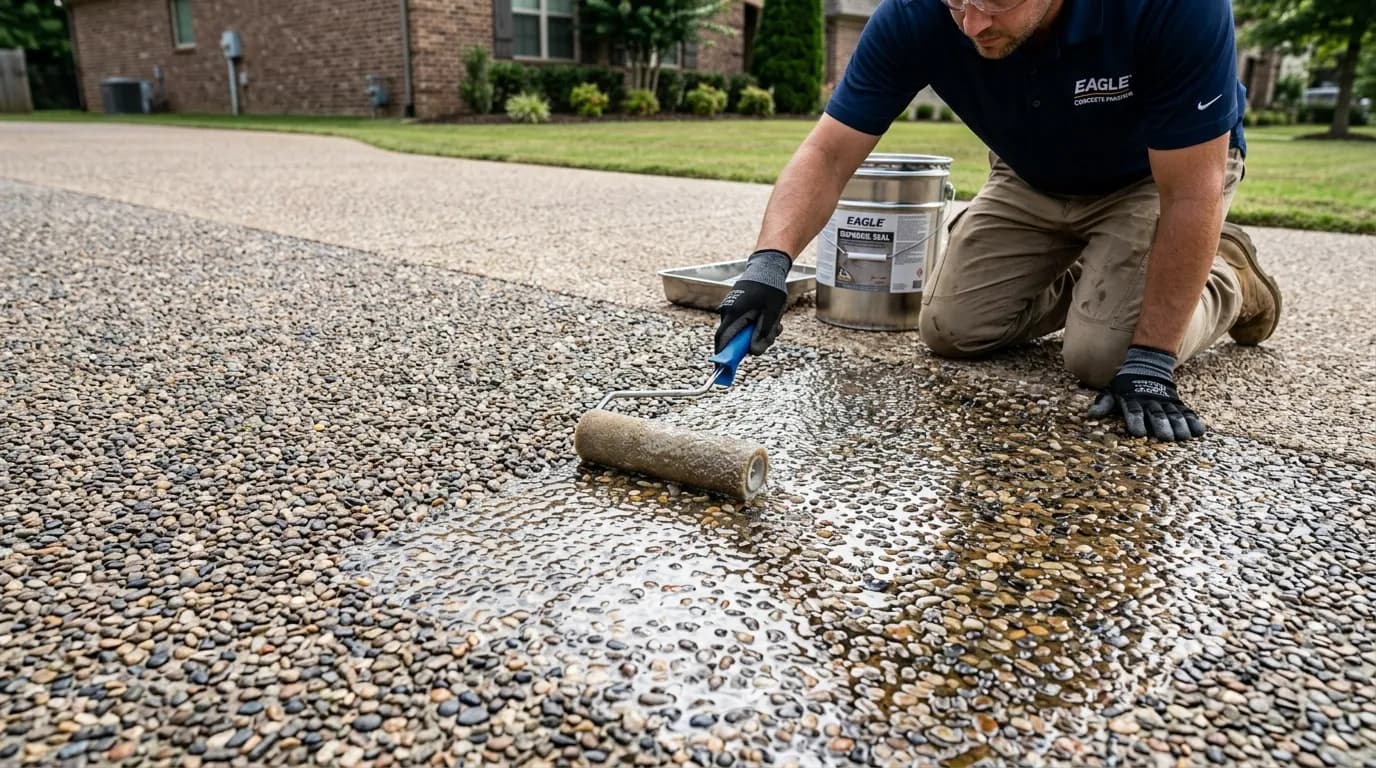
New concrete: First sealer should be applied after the initial 28-day cure — not before. Sealing too early traps moisture and can cause the sealer to blister.
At Opal SA Construction, we apply a curing compound immediately after finishing to protect the concrete during curing, and we advise customers on when to arrange the first permanent sealer. For coloured and exposed aggregate finishes, we typically seal as part of the project.
How to Identify When Resealing Is Due
You do not need to guess — the "water drop test" works every time:
Pour a small amount of water on the concrete surface
If the water beads up — sealer is still active, no action needed
If the water soaks in quickly (within 30–60 seconds) — sealer is depleted, time to reseal
Other signs it is time to reseal:
- Colour appears dull and faded (coloured or exposed aggregate)
- Surface is harder to clean — stains from oil, food, or rust are soaking in
- Concrete surface feels slightly rough or powdery
- Visible white haze or peeling film on the surface
DIY vs Professional Sealing
DIY sealing is possible for:
- Small patios and paths (under 20 m²)
- Plain grey broom driveways being resealed (no colour to protect)
- Penetrating sealers (harder to over-apply)
Professional sealing is recommended for:
- Coloured concrete or exposed aggregate (uneven DIY application causes patchy gloss)
- Driveways over 30 m² (consistent application is critical)
- New installations where the sealer is part of the finish spec
Our Standard Sealing Practice
Every coloured concrete and exposed aggregate installation from Opal SA Construction includes a professional sealer application as part of the job — we do not hand over an unsealed decorative finish. Plain grey finishes can be sealed separately on request.
For existing concrete that needs resealing, we can quote on surface preparation and sealing as a standalone service.
Internal links to include:
Relevant Services & Concreting Guides
Planning a concreting project at your Adelaide property? Explore our specialized services: