Opal SA ConstructionConstruction
Best Time of Year for Concreting in Adelaide: What Homeowners Need to Know
Best Time of Year for Concreting in Adelaide: What Homeowners Need to Know
Timing matters more in residential concreting than most homeowners realise. Adelaide's climate — characterised by hot, dry summers, mild winters, and unpredictable spring and autumn conditions — has a direct and measurable impact on how concrete is poured, how it cures, and how it performs over the long term.
Getting the timing right doesn't just make the installation easier. It affects the structural integrity of the finished surface, the quality of the finish, and the likelihood of defects appearing weeks or months after the job is complete.
This guide explains how each season affects residential concreting in Adelaide, which periods offer the best conditions, and what experienced concreters do to manage poor weather when projects cannot be postponed.
Why Weather Conditions Affect Concrete So Significantly
Concrete is not simply a material that hardens when it dries. The chemical process that gives concrete its strength — known as hydration — requires a careful balance of moisture and temperature to proceed correctly. When that balance is disrupted by extreme heat, cold, wind, or rain, the results range from cosmetic surface defects to serious structural weaknesses.
The Role of Temperature in Concrete Hydration
Temperature is the single most influential environmental factor in concrete performance. When temperatures are too high, the hydration process accelerates beyond the optimal rate — the concrete sets too quickly, reducing the working time available to spread, level, and finish the surface. Rapid setting also traps internal stresses in the slab that manifest as cracking days or weeks later.
When temperatures are too low, hydration slows significantly. Below 10°C, the process becomes so sluggish that concrete may fail to develop its design strength within the expected timeframe. Below 5°C, hydration can effectively stop — and if freshly poured concrete freezes, the expansion of ice crystals within the mix causes irreversible internal damage.
The Role of Moisture and Wind in Surface Quality
Moisture loss from the surface of freshly poured concrete — driven by heat, low humidity, and wind — is a leading cause of plastic shrinkage cracking. This type of cracking occurs before the concrete has gained enough strength to resist the tensile forces created by differential drying between the surface and the body of the slab.
Adelaide's notorious northerly winds during summer create particularly challenging conditions for concrete finishing. Even on days when temperatures are manageable, a strong hot wind can evaporate surface moisture faster than the concrete can accommodate, creating cracking conditions within minutes of the pour.
Concreting in Adelaide's Summer — December to February
Adelaide summers are among the most challenging conditions for residential concreting in Australia. Maximum temperatures regularly exceed 35°C, and heatwave periods with consecutive days above 40°C are not uncommon. Combine this with low humidity and hot northerly winds, and the risks to concrete quality become significant.
The Specific Risks of Summer Concreting in Adelaide
Accelerated Setting Time
In extreme heat, concrete can begin to stiffen within 30 to 45 minutes of being poured — compared to 90 minutes or more under ideal conditions. This dramatically compresses the time available for spreading, screeding, and finishing. For larger residential slabs or driveways, this compressed window creates genuine quality risks, particularly toward the end of the pour where the concrete placed first may already be stiffening while the last section is still being screeded.
Plastic Shrinkage Cracking
As described above, rapid surface evaporation during summer pours is a primary cause of plastic shrinkage cracking. These cracks — which appear as shallow, irregular surface fissures — typically develop within the first few hours of the pour and are largely irreversible once formed.
Reduced Long-Term Strength
Concrete that sets too rapidly during curing develops lower long-term compressive strength than concrete cured under controlled conditions. This is because rapid evaporation interrupts the hydration process before it is complete, leaving a proportion of the cement unhydrated and therefore non-contributing to the final strength of the slab.
How Professional Concreters Manage Summer Conditions in Adelaide
Experienced Adelaide concreters do not simply avoid summer work — they adapt their methods to manage the risks. Common strategies include:
Early Morning Scheduling
Scheduling pours for first light — typically between 5am and 7am during summer — takes advantage of the coolest part of the day and maximises working time before temperatures peak. Many professional concreters refuse to begin residential pours after mid-morning during heatwave conditions.
Use of Retarding Admixtures
Chemical admixtures can be added to the concrete mix to slow the hydration process and extend working time. These retarders are widely used in hot-weather concreting and, when correctly dosed, have no negative effect on the finished strength of the slab.
Active Curing Management
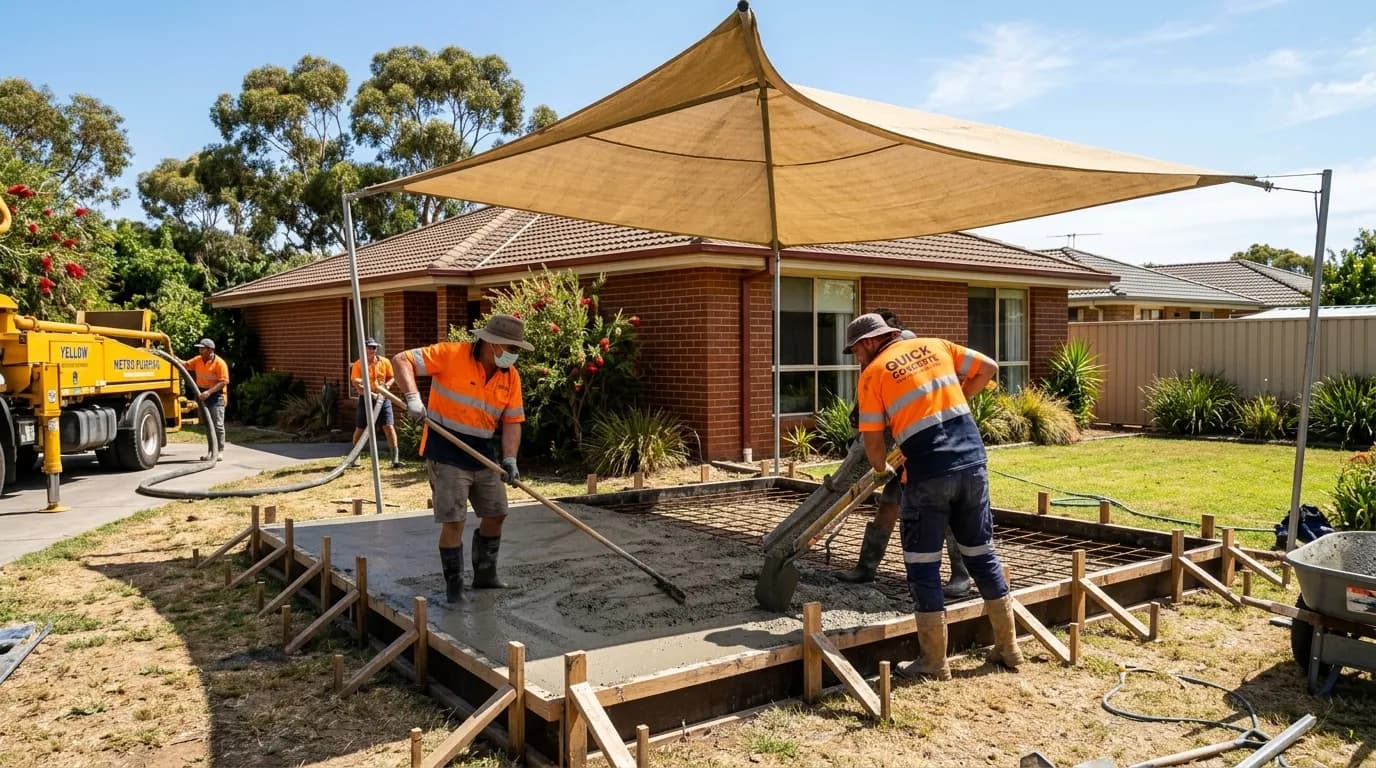
After the pour, freshly placed concrete must be actively protected from moisture loss. This involves covering the surface with wet hessian, applying a liquid curing compound, or a combination of both. Shading the surface from direct sun during the critical first 24 to 48 hours is also recommended.
Is Summer Concreting in Adelaide Ever Advisable?
For homeowners who have flexibility, scheduling residential concreting projects outside of the December to February peak is generally advisable. However, experienced concreters can and do deliver quality results during summer months by applying appropriate controls. The key is choosing a contractor with genuine hot-weather experience — not one who simply proceeds without adjustment.
Concreting in Adelaide's Autumn — March to May
Autumn is widely regarded as one of the two best seasons for residential concreting in Adelaide. Temperatures moderate from the summer extremes, humidity increases slightly, and the risk of both extreme heat and frost is low.
Why Autumn Offers Near-Ideal Concreting Conditions
Moderate Temperatures Support Controlled Hydration
Daytime temperatures in Adelaide's autumn typically range between 18°C and 28°C — within the optimal range for concrete hydration. Setting times are predictable, working time is adequate, and the risk of plastic shrinkage cracking is significantly reduced compared to summer.
Reduced Wind and Evaporation Risk
Adelaide's prevailing northerly winds diminish through autumn, reducing the evaporation risk that characterises summer pours. This makes surface finishing more manageable and reduces the likelihood of plastic shrinkage cracking even on exposed sites.
What to Watch for in Autumn
Late autumn — particularly May — can bring early cold fronts that push overnight temperatures toward 10°C or below. For projects scheduled late in the day or on sites with poor drainage, this can slow curing and extend the time before the surface is ready for use. A professional concreter will monitor forecasts and adjust scheduling or apply insulating covers if low overnight temperatures are expected.
Concreting in Adelaide's Winter — June to August
Adelaide winters are mild by national standards, but they introduce a different set of challenges for residential concreting. Overnight temperatures can drop to between 7°C and 10°C in most metropolitan areas, and prolonged cold spells occasionally push temperatures lower.
The Challenges of Winter Concreting in Adelaide
Slowed Hydration and Extended Curing Time
At temperatures below 15°C, the hydration process slows noticeably. This means concrete takes longer to reach the strength required for foot traffic and vehicle use. Homeowners should expect extended wait times before the surface can be put into use — typically 48 to 72 hours for foot traffic rather than the standard 24 hours in warmer conditions.
Rain Risk and Surface Damage
Adelaide's winter months bring the highest rainfall of the year. Heavy rain falling on freshly poured concrete — particularly within the first two to four hours of the pour — can dilute the surface layer, wash away cement paste, and permanently damage the finish. Professional concreters monitor forecasts closely and will reschedule if significant rain is expected within the working window.
The Advantages of Winter Concreting
Despite these challenges, winter offers one significant advantage — lower demand. Concreting companies in Adelaide are typically less busy during the cooler months, which means shorter lead times, more scheduling flexibility, and in some cases more competitive pricing. For homeowners who are not in a hurry, winter can be a strategically smart time to book a project.
What Professional Concreters Do in Winter
Experienced concreters adjust their approach for cold-weather pours by using accelerating admixtures to maintain normal setting times, scheduling pours for the warmest part of the day, and insulating freshly poured slabs overnight when temperatures are expected to drop sharply. On sites with good sun exposure, midwinter pours can proceed with minimal compromise to quality.
Concreting in Adelaide's Spring — September to November
Spring is the other peak season for residential concreting in Adelaide and, alongside autumn, offers the most consistently favourable conditions for quality installations.
Why Spring Is an Excellent Time for Residential Concreting
Rising Temperatures Without Summer Extremes
Spring temperatures in Adelaide climb steadily from the mild conditions of late winter toward the low-to-mid 20s°C by November — well within the optimal range for concrete hydration. The risk of frost is negligible, and the risk of extreme heat remains low until late in the season.
Longer Daylight Hours
Longer days in spring extend the available working window, which is particularly useful for larger residential projects that require more time to pour, screed, and finish. More daylight also means better visibility during finishing work, which contributes to surface quality.
Spring Booking Demand — Plan Ahead
Spring is the busiest season for residential concreting companies across Adelaide. Homeowners who have been waiting out the winter months typically rush to book projects as soon as conditions improve, and quality concreters fill their schedules quickly. If you are planning a spring project, contacting your concreter in July or August to secure a booking is strongly advisable.
Late Spring Caution
By November, Adelaide temperatures are climbing toward summer levels. The risks associated with hot-weather concreting — accelerated setting, plastic shrinkage cracking, rapid moisture loss — begin to re-emerge toward the end of the month. Projects scheduled for late November should be treated with the same precautions as early summer work.
Seasonal Summary — Adelaide Concreting at a Glance
Best Seasons for Residential Concreting in Adelaide
Autumn — March to May — and Spring — September to October — consistently offer the most favourable conditions for residential concreting in Adelaide. Temperatures are moderate, wind and evaporation risks are manageable, and rainfall is predictable enough for effective scheduling.
Manageable With Professional Oversight
Winter — June to August — presents manageable challenges that experienced concreters routinely handle. The primary considerations are slower curing, rain risk, and extended timelines before full use. The trade-off is lower demand and better availability.
Highest Risk — Proceed With an Experienced Contractor
Summer — December to February — carries the highest environmental risk for residential concreting. Quality is entirely dependent on the experience and preparation of the contractor. Poorly managed summer pours are a leading cause of surface defects in Adelaide residential concreting.
Practical Tips for Adelaide Homeowners Planning a Concreting Project
Book Early for Spring and Autumn
Quality concreters in Adelaide book out weeks — sometimes months — in advance during the peak autumn and spring seasons. If your project is time-sensitive, contact your preferred contractor well ahead of your preferred start date.
Discuss Weather Contingency With Your Concreter
Before work begins, ask your concreter what their contingency plan is for adverse weather. A professional contractor will have a clear answer — including specific temperature thresholds at which they will postpone a pour and what measures they take to protect freshly placed concrete from rain or wind.
Don't Let Season Override Contractor Quality
Seasonal conditions matter, but contractor quality matters more. A skilled, experienced concreter can deliver an excellent result in challenging summer conditions. An inexperienced contractor can deliver a poor result in perfect autumn weather. Choosing the right contractor is always the most important variable.
Understand Your Curing Obligations as a Homeowner
Regardless of season, freshly poured concrete requires careful handling during the curing period. Keep vehicles off the surface for the recommended period, protect it from heavy rain in the first 24 hours, and follow your concreter's aftercare instructions. Premature loading or surface damage during curing is a homeowner responsibility, not a workmanship defect.
Frequently Asked Questions
What is the worst month to pour concrete in Adelaide?
January and February present the highest risk conditions due to extreme heat, low humidity, and strong northerly winds. While quality results are achievable with proper precautions, these months require the most active management from an experienced concreter.
Can concrete be poured in the rain in Adelaide?
Light drizzle after the concrete has begun to set is generally tolerable. Heavy rain during or immediately after a pour can damage the surface and dilute the mix. Most professional concreters will not begin a pour if significant rain is forecast within the working window.
Does winter concreting cost more in Adelaide?
Not necessarily. Some contractors offer more competitive pricing during quieter winter months. The key consideration is extended curing time — expect the surface to take longer to reach usable strength compared to warmer-season installations.
How far in advance should I book a concreting project in Adelaide?
For autumn and spring projects, booking 4 to 8 weeks in advance is recommended. For summer and winter projects, 2 to 4 weeks is typically sufficient due to lower demand outside peak seasons.
Plan Your Adelaide Concreting Project With the Right Team
Understanding how Adelaide's seasons affect residential concreting helps you plan smarter, set realistic expectations, and choose a contractor who has the experience to deliver quality results regardless of when your project is scheduled.
Opal SA Construction is a licensed residential concreting contractor serving homeowners across Adelaide and surrounding suburbs — including Para Vista, Salisbury, Gawler, Angle Vale, Modbury, Rostrevor, Paralowie, Burton, and Virginia.
Our team has extensive experience managing Adelaide's seasonal conditions and delivers quality results year-round through careful planning, correct processes, and transparent communication from first contact to project completion.
📞 +61 466 801 058
📧 support@opalsaconstruction.com
🕐 Monday – Saturday | 8am – 5pm
Request a Free Quote and Site Visit →
Relevant Services & Concreting Guides
Planning a concreting project at your Adelaide property? Explore our specialized services: